What we clean
Driveways around Prescot and Merseyside come in every surface going, and each one needs a different approach:
- Block paving, the standard on most estates built from the nineties onwards in Whiston, Huyton and Rainhill
- Tarmac and asphalt
- Concrete, including pattern imprinted concrete
- Resin-bound and resin-bonded surfaces
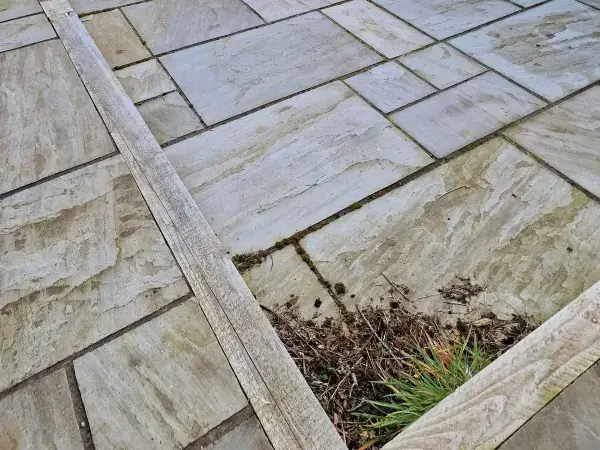
- Natural stone flags and setts, including the soft red sandstone you see across south Liverpool
Moss, green algae, black spot lichen, oil drips, tyre marks and general traffic film: if it’s making your drive look tired, we can shift it.
How we do it
- Survey first. We check the surface, the joints, the drainage and any staining before a drop of water goes down. The pressure that cleans concrete would wreck soft sandstone, so knowing what we’re standing on matters.
- Pre-treatment. Moss and weeds get treated so they die at the root instead of just getting a haircut.
- Deep clean. A rotary surface cleaner covers the main area evenly. That’s what gives a uniform finish rather than the stripey mess you get from waving a lance about.
- Detail work. Edges, corners, steps, drain covers and the strip up against the house wall all get finished by hand lance.
- Re-sanding. On block paving we brush fresh kiln-dried sand back into the joints once the surface has dried. A block-paved drive needs full joints to hold its shape, so putting the sand back is not optional in our book.
- Sealing, if you want it. An optional seal on block paving, imprinted concrete and other porous surfaces helps the drive shrug off oil and slows the moss coming back.
- Tidy up. Walls, doors and windows get rinsed of splash, the waste goes down the drain and the frontage gets brushed off before we leave.
What goes wrong when it’s done badly
Plenty. A cheap jet wash with a bare lance leaves zebra stripes across an open drive that only another proper clean will fix. Too much pressure blasts the sand clean out of block paving joints, and without it the blocks rock, sink at the edges and let weeds in worse than before. Soft sandstone flags etch and fur up if you hit them at full pressure; around the older parts of south Liverpool where sandstone is everywhere, they need a gentler wash or a soft washing treatment instead. Pattern imprinted concrete has a coloured, sealed face that careless washing strips off in patches. Resin drives can lose stone if the lance gets too close. Matching the method to the surface is most of the job.
Why drives round here get so green
Merseyside sits in damp air off the river for most of the year. North-facing frontages, tree cover and the shade between terraced houses in Prescot, St Helens and Widnes all hold moisture, and moss and algae love it. Black spot lichen roots into porous surfaces and won’t shift with water alone; it needs treating first, which is why our cleans start with chemistry rather than brute force. Left alone, a green drive is a slippery drive, and block paving with empty joints only gets worse each winter.
Get a free fixed quote
The price is agreed before we start and it doesn’t change on the day. We’re based in Prescot and cover Knowsley, St Helens, east and south Liverpool, Widnes and everywhere within roughly 15 miles.